
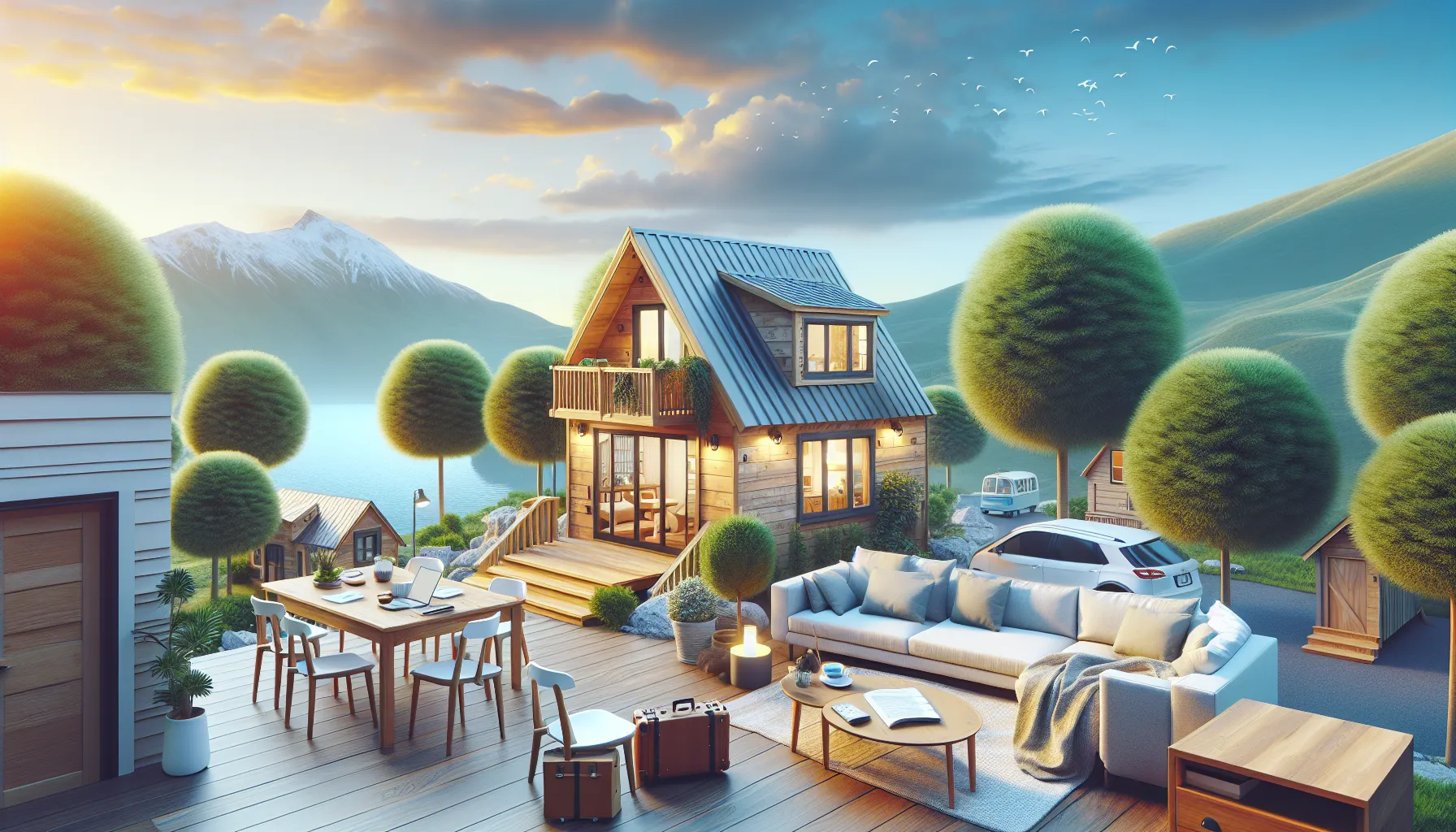
Tiny Homes for Sale in New Hampshire: Builders, Prices, and Where to Place One (2026)
If you're looking for a tiny home in New Hampshire — to live in, rent out, or place as an ADU — there are three things you actually need to know upfront: which NH builders deliver here, what NH-specific code (RVIA ANSI 119.5) applies to wheeled units, and where in the state you can legally place one year-round. This guide covers all three with current pricing, then goes into financing, ROI, and the cold-climate construction details that matter in the Granite State.
Where to Buy a Tiny Home in NH: Active Builders and Dealers (2026)
| Builder / Dealer | Location | Specialty | Typical Price Range |
|---|---|---|---|
| Kinstruct Tiny Homes | New Hampshire | Standalone tiny homes + ADUs. NH Home Builders Cornerstone Award winner (2024, 2025) for Best ADU. | $80,000–$180,000 |
| Backcountry Tiny Homes | Hampstead, NH | Woman-owned. Custom design, construction, and build classes. Bunkhouse and 4-season cabin models. | $60,000–$150,000 |
| Beechwood Tiny Homes | NH (regional builder) | Purpose-built tiny homes for primary, vacation, or rental use. Cold-climate construction. | $70,000–$160,000 |
| Zook Cabins (park models, NH service area) | PA-based, delivers to NH | RVIA ANSI 119.5 certified park models. A-Frame and traditional designs. | $75,000–$140,000 |
| Great Lakes Tiny Home | Regional (NH delivery) | Firefly Backyard Escape, Cub cabin, A-Frame Solo, mobile dwelling units. | $50,000–$120,000 |
| Regional manufacturers (VT, ME, MA) | New England | Standard floor plans, often competitive pricing due to production volume. | $60,000–$130,000 |
Listings of existing units for sale (used and new) also surface on LandSearch, Houzeo, and Tiny House Listings — useful for comparison shopping but skewed toward asking price rather than typical builder cost.
NH Tiny Home Classification: RVIA Standards and What They Mean
New Hampshire treats most wheeled tiny homes as RVs, not as real estate. The state's standard for Tiny Homes on Wheels (THOWs) is RVIA ANSI 119.5 — a certification verifying the unit meets recreational vehicle construction codes. Builders selling RVIA-certified park models in NH (Zook, several Great Lakes models, others) include this seal as standard, which matters for three reasons:
- Placement rights. RVIA-certified units can typically be placed in NH campgrounds, RV parks, and approved seasonal communities without additional code compliance work.
- Insurance. Standard RV insurance policies cover RVIA-certified units; uncertified custom builds often require specialty policies.
- Resale. Buyers and lenders treat RVIA-certified units as a known quantity; uncertified units can be hard to finance or resell.
For permanently-sited tiny homes (on foundation), NH defers to local building code rather than RVIA. These units must meet standard residential construction requirements and are classified as real property — which affects taxes, financing, and resale value but also opens up traditional mortgage products in some cases.
Can You Live in a Tiny Home Year-Round in New Hampshire?
It depends on the town. NH state law allows ADUs statewide, but each municipality controls zoning and short-term rental rules. The practical pattern:
- Foundation-set tiny homes classified as ADUs: usually permitted year-round in towns that have adopted ADU-friendly ordinances.
- RVIA park models / THOWs: most often classified as RVs and permitted in campgrounds, RV parks, or approved seasonal communities — not always as primary residences year-round.
- Tiny homes on private rural land: highly variable. Some towns allow it under ADU rules, some require minimum dwelling sizes that exclude tiny homes, some have no specific provisions either way.
Always verify with the town's planning board or zoning office before purchasing. Specifically ask: "Can I place a [foundation / THOW / park model] tiny home at this address for [year-round occupancy / seasonal use / short-term rental]?"
Tiny Home Costs in New Hampshire: 2026 Reality
Realistic 2026 price ranges in NH:
- Used park model or THOW: $30,000–$80,000
- New RVIA-certified park model: $60,000–$140,000
- New custom-built tiny home on foundation: $90,000–$200,000
- Tiny home + land package (rural NH): $150,000–$400,000+ depending on location
- Tiny home + lakeside or White Mountains land: $300,000–$700,000+
LandSearch's NH tiny home listings currently average around $654,000 — but this includes land, often in premium areas. The unit cost alone is far lower; the location premium is what pushes the listed prices up.
How Tiny Home Transactions Work in NH
Typical Buying Process
- Define use case: primary residence, vacation use, or short-term rental — this affects which builder and which zoning to target.
- Budget & financing: Personal loans, RV loans (for RVIA units), or specialty tiny home lenders are most common. Traditional mortgages generally only work on foundation-set units classified as real property.
- Zoning & placement: Verify with the specific town. NH's town-level autonomy means rules vary widely.
- Builder selection: Local NH builders give site-visit access and faster warranty response. Regional manufacturers offer competitive pricing and refined floor plans.
- Inspection & due diligence: Verify insulation rating (R-30+ walls, R-49+ roof), heating system, RVIA certification status, and snow load rating.
- Purchase & closing: Real property transactions follow standard NH real estate process. RVIA units transfer like RVs.
NH Regional Spotlight: Where to Buy
The Lakes Region — Lake Winnipesaukee, Squam Lake, Newfound Lake — sees the highest short-term rental demand, with summer occupancy often exceeding 85% in towns like Moultonborough, Meredith, and Holderness. Fall foliage gives a secondary spike.
The White Mountains corridor (Conway, Lincoln, Bethlehem, Franconia) offers year-round appeal — skiing at Cannon and Bretton Woods, hiking the Presidential Range, and leaf-peeping. Tiny homes here command $180–$250/night during ski season. Shoulder months (April–May, October–November) require cash reserves.
The Seacoast (Hampton, Rye, Exeter) attracts professionals seeking affordable primary residences within commuting distance of Portsmouth and Boston. Placement regulations are stricter, particularly for THOWs.
The Monadnock Region (Keene, Peterborough, Jaffrey) is the affordable alternative. Land prices are lower and several towns are receptive to tiny house developments. ROI timelines are longer due to lower nightly rates but acquisition costs are proportionally cheaper.
Winterization: Non-Negotiable for NH Tiny Homes
NH winters regularly drop below 0°F in northern counties, and snow loads are structural. The systems that matter:
- Insulation: R-30 minimum in walls, R-49+ in the roof. Many tiny homes built for milder climates use R-13/R-19, creating heating cost and guest comfort problems.
- Heating: Cold-climate heat pumps rated to -15°F or below (Mitsubishi, Fujitsu) are increasingly common. Propane is reliable but adds recurring cost. Wood stoves require proper chimney and safety protocols for rentals.
- Pipe freeze prevention: Self-regulating heat tape, insulated skirting, thermal-protected well pump housing. Budget $1,500–$4,000 in winterization upgrades for units lacking these systems.
- Snow load capacity: NH ground snow load is 60 psf in the south, 100+ psf at higher elevations. Always get builder documentation on roof structure.
Land Leasing vs. Ownership
Land ownership provides security and clearest path to real estate appreciation. Foundation-set units on owned land can sometimes qualify for conventional financing. NH land prices near lakes, mountains, or southern commuter zones add $40,000–$200,000+ to total cost.
Lot leasing keeps upfront costs lower. NH lot rents typically range from $400–$900/month. For STR investors, a lakeside lot at $700/month is justifiable when nightly rates exceed $150. Risks: lease terms, rent escalation, and landlord restrictions on rental use require legal review.
Tiny home communities and co-ops are gaining traction. Several planned communities in Concord and Keene areas are at various development stages. These offer shared infrastructure and sometimes favorable zoning treatment, but require vetting governance and financial health.
ROI: Tiny Home vs. Single-Family Rental in NH
A single-family home in NH's Lakes Region at $420,000 might generate $2,200/month long-term rental — gross yield ~6.3%, net 3–4% after expenses.
Two well-placed tiny homes at $160,000 combined + $30,000 land prep ($190,000 total) at $135/night average with 65% occupancy produce roughly $64,000 gross annually. After lot rent, utilities, platform fees, cleaning, and management (~$22,000), net income approaches $42,000 — cash-on-cash return exceeding 22%.
This isn't universal — it depends heavily on location, management, and regulatory permissibility. But it shows why NH attracts serious tiny home investors. Tax treatment also differs: tiny homes classified as personal property may not qualify for 1031 exchanges or standard depreciation schedules.
Key Benefits
- Affordability: $50,000–$140,000 vs. NH median home around $400,000+.
- Higher per-night rental rates than equivalent studios — typically $130–$200/night in peak season.
- Lower utility bills (often under $75/month).
- Reduced property taxes for THOWs/personal-property classification.
- Smaller land footprint, enabling multi-unit "tiny house village" plays.
Challenges to Plan For
- Zoning friction: Code upgrades for permanent placement can run $5,000–$15,000.
- Financing: Traditional mortgages rarely cover units under 400 sq ft or mobile units. Personal loans and RV loans dominate.
- Insurance: Specialized policies, especially for THOWs and off-grid units.
- Resale market still evolving: Narrower buyer pool than traditional properties.
- Operational variability: Seasonal occupancy swings, especially in ski/lake markets.
Due Diligence Checklist
- Confirm zoning with the town's planning board.
- Verify legal access to water, septic, electricity, and internet.
- Check short-term rental permissibility and registration requirements.
- Evaluate rental demand on Airbnb, Vrbo, and platforms tailored to tiny homes.
- Confirm RVIA certification status (for THOWs/park models) or local code compliance (for foundation builds).
- Inspect insulation, heating system, and snow load capacity documentation.
Operating a Tiny Home Rental in NH
- Multi-channel exposure: Airbnb, Vrbo, and platforms tailored to unique stays. JmartBookings is a global rental marketplace where hosts pay just a 5% guest commission and listings have full visibility on age/deposit policies — useful for tiny home hosts who want straightforward terms.
- Dynamic pricing: Beyond Pricing or Wheelhouse adjust nightly rates by demand, season, and local events.
- NH rooms & meals tax: Must be collected on short-term stays. Some towns also require local STR registration.
Bottom Line
Tiny homes for sale in NH range from $30,000 used to $200,000+ for new foundation builds, with land adding $40,000–$300,000+ depending on location. The decisions that actually matter are: RVIA certification (for wheeled units), town-level zoning (for placement), and cold-climate construction specs (for year-round livability). Named NH-specific builders include Kinstruct, Backcountry Tiny Homes (Hampstead), and Beechwood. For STR investors, the Lakes Region and White Mountains offer the strongest yields; the Monadnock Region offers the lowest entry cost. Start by defining your use case, then verify zoning, then shortlist builders.
Related Reads
- Tiny homes for sale in NH with land -- buyer's guide
- NH tiny home communities -- where they are and what to expect
- Maine pet-friendly vacation rental guide
- Florida snowbird rental market guide
- Wolf Laurel cabin host guide
- Private pool vacation rental market data
- Bodega Bay 2026 rental rates coastal stay planning guide
Join the Discussion
No comments yet. Be the first to share your thoughts!