
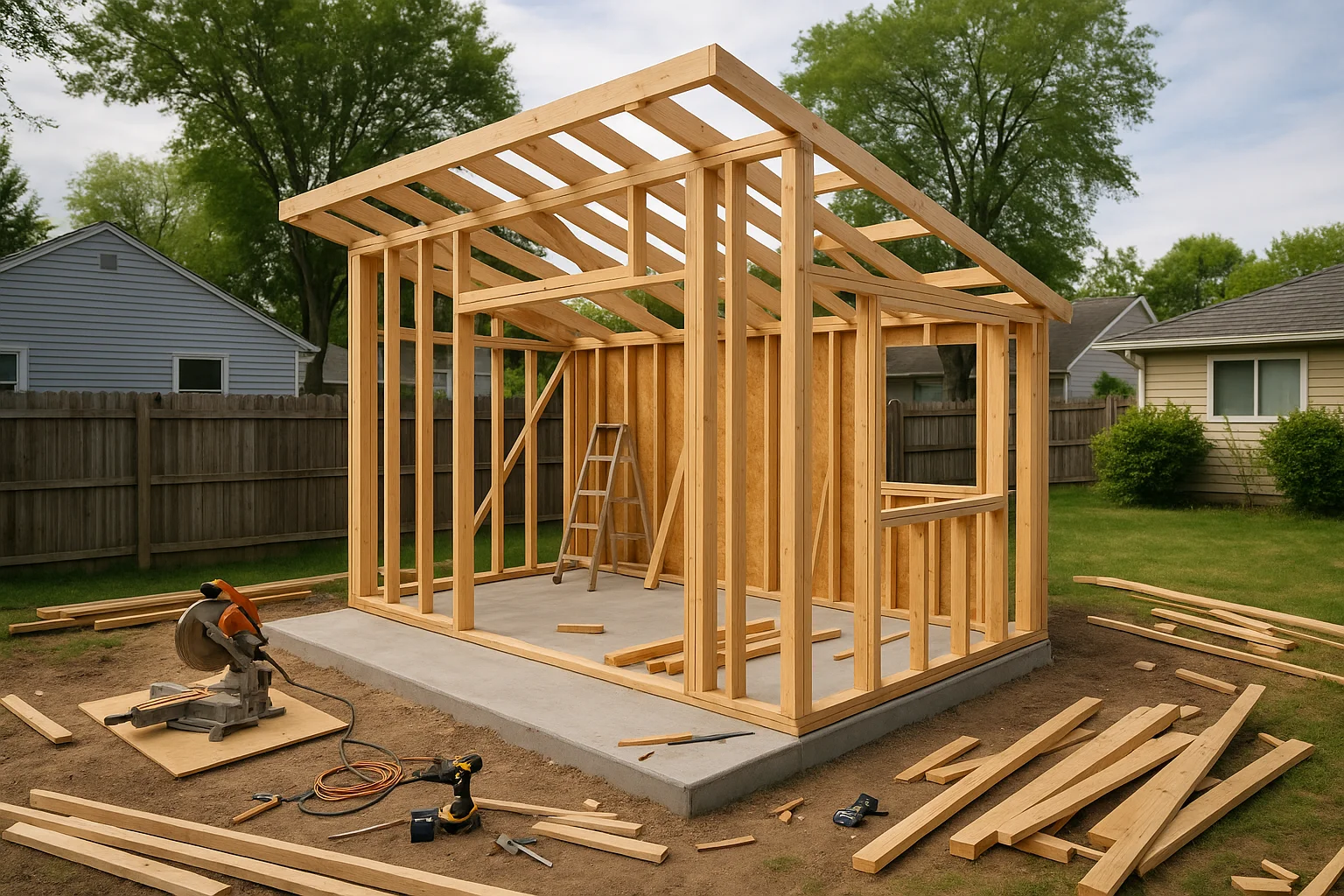
There's No Single Answer — It's Local, Not National
The honest answer to "can I add a tiny home to my property" is: it depends on your specific city or county's zoning code, not on any single nationwide rule. Zoning authority in the US sits almost entirely with local governments, so two properties a short drive apart, in different municipalities, can have completely different answers to the same question. Before making any decisions, the only reliable step is checking directly with your local planning or zoning department — general guidance like this can tell you what categories and questions matter, but it can't substitute for that local check.
The Key Legal Distinction: ADU vs. On-Wheels Tiny Home
Most of the regulatory complexity around tiny homes comes down to one distinction that decides which set of rules applies:
| Type | How it's typically treated |
|---|---|
| Tiny home on a permanent foundation | Usually falls under Accessory Dwelling Unit (ADU) rules, which many jurisdictions have been actively easing in recent years to address housing shortages |
| Tiny home on wheels (THOW) | Often treated more like an RV or trailer than a permanent dwelling, which in many places restricts it to temporary or seasonal use rather than a permitted permanent residence |
This distinction matters more than almost anything else in the tiny home conversation. A tiny house built to look identical to another can be legal as a permanent second dwelling in one jurisdiction and restricted to occasional use in another, purely because of foundation status and how the local code classifies it.
How Many Tiny Homes Can Fit on an Acre?
This depends entirely on local lot-size and setback rules, but general industry guidance puts it around 10 to 18 tiny homes per acre at typical densities, with 10-12 units per acre often cited as a more comfortable, livable target once setbacks and shared access are accounted for. For a single ADU or guest house on your own property (rather than a multi-unit tiny home development), the more relevant number is minimum lot size: many jurisdictions require at least a quarter-acre for a detached ADU, though some tiny-home-friendly cities have reduced that to smaller suburban lot sizes with adequate setbacks. If you're asking this question because you want to add one small structure to your own property (not build a tiny-home park), lot-size minimums and setback rules matter more than the per-acre density figure — check both with your local zoning office.
Is a "Guest House" the Same as an ADU?
In most zoning codes, yes — a guest house, in-law suite, granny flat, and ADU are typically the same regulatory category with different informal names, so the ADU rules and steps above apply whether you call it a guest house or an ADU. A small number of jurisdictions do distinguish a non-kitchen "guest house" (no cooking facilities, can't be rented separately) from a full ADU (kitchen included, may be rentable) — if your plan includes a kitchen, confirm which category your local code uses, since the rules and permitted uses can differ between the two even within the same town.
What ADU Rules Generally Cover
Where a tiny home qualifies as an ADU, local rules typically address a similar set of questions, even though the specific answers vary by jurisdiction:
- Minimum and maximum square footage — many codes set both a floor and a ceiling on ADU size, and some jurisdictions define smaller "junior" ADU categories with different rules again.
- Foundation and building code requirements — whether the structure must meet the same residential building code as a standard house, and what qualifies as a permanent foundation.
- Setbacks and lot coverage — how far the structure must sit from property lines and how much of the lot it can occupy.
- Utility connections — whether it needs its own separate utility connections or can share the main house's.
- Owner-occupancy requirements — some jurisdictions have historically required the main house or the ADU to be owner-occupied, though this specific requirement has been getting rolled back in a number of places recently.
- Parking requirements — whether an additional parking space must be provided for the ADU.
The National Trend: ADU Rules Are Loosening, Unevenly
Across the country, the broad direction over the past several years has been toward easing ADU restrictions as a response to housing affordability pressure, though the pace and specifics vary enormously by state and city. Two documented examples of this trend, without claiming they represent every jurisdiction:
- California has passed a series of state laws over recent years aimed at making ADUs easier to build, including provisions removing parking requirements for smaller ADUs and eliminating owner-occupancy requirements for junior ADUs in many cases. These are state-level laws that constrain what local governments can restrict, but implementation and additional local rules still vary by city and county.
- Oregon was among the earliest states to mandate ADU allowances statewide, requiring cities above a certain size to permit ADUs and later removing owner-occupancy and off-street parking requirements in larger cities. More recent state legislation has continued to address related restrictions, such as private covenants that attempt to block ADUs.
These are real, documented state-level policy directions, not guarantees that apply everywhere within those states — and most states have no equivalent statewide ADU mandate at all, leaving the decision entirely to individual cities and counties.
Practical Steps Before You Buy or Build
- Contact your local planning or zoning department directly and ask specifically about tiny homes, ADUs, and minimum dwelling size — not just "can I put a small structure on my property," since the answer often differs by intended use.
- Clarify foundation status early, since this single factor often determines which entire rulebook applies to your project.
- Ask about minimum square footage requirements specifically — some municipalities have minimum dwelling size rules that a genuinely tiny home may not meet for a permanent residence, even where ADUs are otherwise permitted.
- Check HOA rules separately from zoning if applicable — a homeowners association can impose its own restrictions that are stricter than local zoning, and zoning approval doesn't override an HOA covenant.
- Get any verbal guidance in writing where possible, since zoning rules and their interpretation can change and informal answers aren't always reliable later.
The Bottom Line
Tiny homes are a well-documented, increasingly mainstream part of the national conversation about housing, and many jurisdictions have been actively working to make ADUs easier to build. But whether you personally can add one comes down entirely to your specific city or county's current zoning code, the foundation status of the structure you're planning, and any HOA restrictions layered on top — not to any single answer that applies everywhere.



Join the Discussion
No comments yet. Be the first to share your thoughts!