
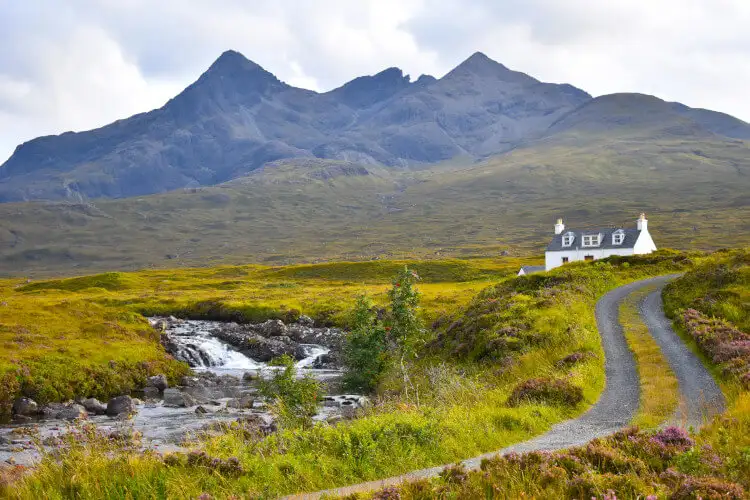
What "Remote" Actually Means in Scotland
Scotland has genuinely remote cottage stays in a way few other parts of the UK can match, but "remote" covers a wide range in practice — from a cottage 20 minutes down a single-track road from the nearest village, to one that's a genuine hour or more from the nearest shop. Before booking, it's worth being specific with the host about what remote means for that particular property: driving distance to the nearest town with groceries and fuel, whether the last stretch is single-track or unpaved, and what mobile signal is actually like on site rather than in the wider area.
The Regions Known for Genuinely Remote Cottages
| Region | Character |
|---|---|
| The Highlands (mainland) | The most accessible form of "remote" — large glens and coastal stretches with cottages a real drive from the nearest town, but still connected by mainland roads |
| Isle of Skye | A mix of well-visited villages and genuinely secluded coastal cottages, particularly on the Skye peninsulas away from the main tourist routes |
| Outer Hebrides (Lewis, Harris, Uist, Barra and others) | Some of the most isolated stays in Scotland, reached by ferry, with a distinct pace of life and limited services outside the main settlements |
| Argyll (including smaller islands like Easdale) | A mix of mainland peninsulas and small islands, often reached by short ferry crossings, with cottages ranging from moderately secluded to very isolated |
Mobile Signal and Connectivity: The Honest Picture
This is the detail that catches out the most guests. Mobile coverage across the Highlands and islands is genuinely patchy and depends heavily on the specific location and network, not just the general region — some remote cottages have no mobile signal at all but do offer wi-fi, subject to the reliability you'd expect in a rural setting; others have reasonable signal on one network but none on another. Never assume connectivity based on how "remote" the listing sounds. Ask the host directly which network works there, whether the property has wi-fi, and what the backup is if it goes down — a genuinely useful question if you need to work remotely or simply want peace of mind.
Stocking Up: Groceries and Supplies
The more remote the cottage, the more this matters. In much of the Highlands and islands, the nearest supermarket or even a well-stocked general store can be a real drive away, and on island routes, ferry timetables can effectively decide what day you're able to restock. Practical habits that make a real difference:
- Stock up properly at the last town with a full supermarket before heading to the cottage, rather than assuming there will be a shop nearby.
- Check whether the host offers a welcome hamper or pre-arranged shopping service, which some remote-cottage owners provide specifically because they know the logistics.
- If travelling to an island, check ferry schedules and capacity in advance, especially in peak season when sailings can book out.
- Fuel up before the final stretch — petrol stations thin out fast once you're off the main routes.
What to Expect: Weather, Self-Catering and Highland Hospitality
Weather in the Highlands and islands changes quickly and can differ noticeably from forecasts for the nearest town, so pack for wind and rain regardless of season and don't plan a trip entirely around clear-weather activities. Most remote Scottish cottages are self-catering rather than serviced, which is part of the appeal for guests wanting genuine privacy, but it does mean coming prepared rather than expecting daily services. What consistently comes through in guest experiences of this kind of stay is the hospitality of hosts in these areas — many owners of remote cottages live locally and are a genuinely useful source of real-time advice on weather, road conditions and what's actually open nearby, since online information for very rural areas can be outdated.
Choosing the Right Level of Remote
Not every guest wants the same degree of isolation. A mainland Highland cottage a short drive from a village offers a strong sense of remoteness with a manageable safety margin for groceries, fuel and phone signal. An island cottage reached by ferry, or one deep into the Outer Hebrides, offers something closer to genuine escape, but demands more planning around supplies, weather and travel timing. Being honest with yourself about which of these you actually want — rather than booking the most dramatic-sounding listing — makes for a far better trip.

Join the Discussion
No comments yet. Be the first to share your thoughts!