
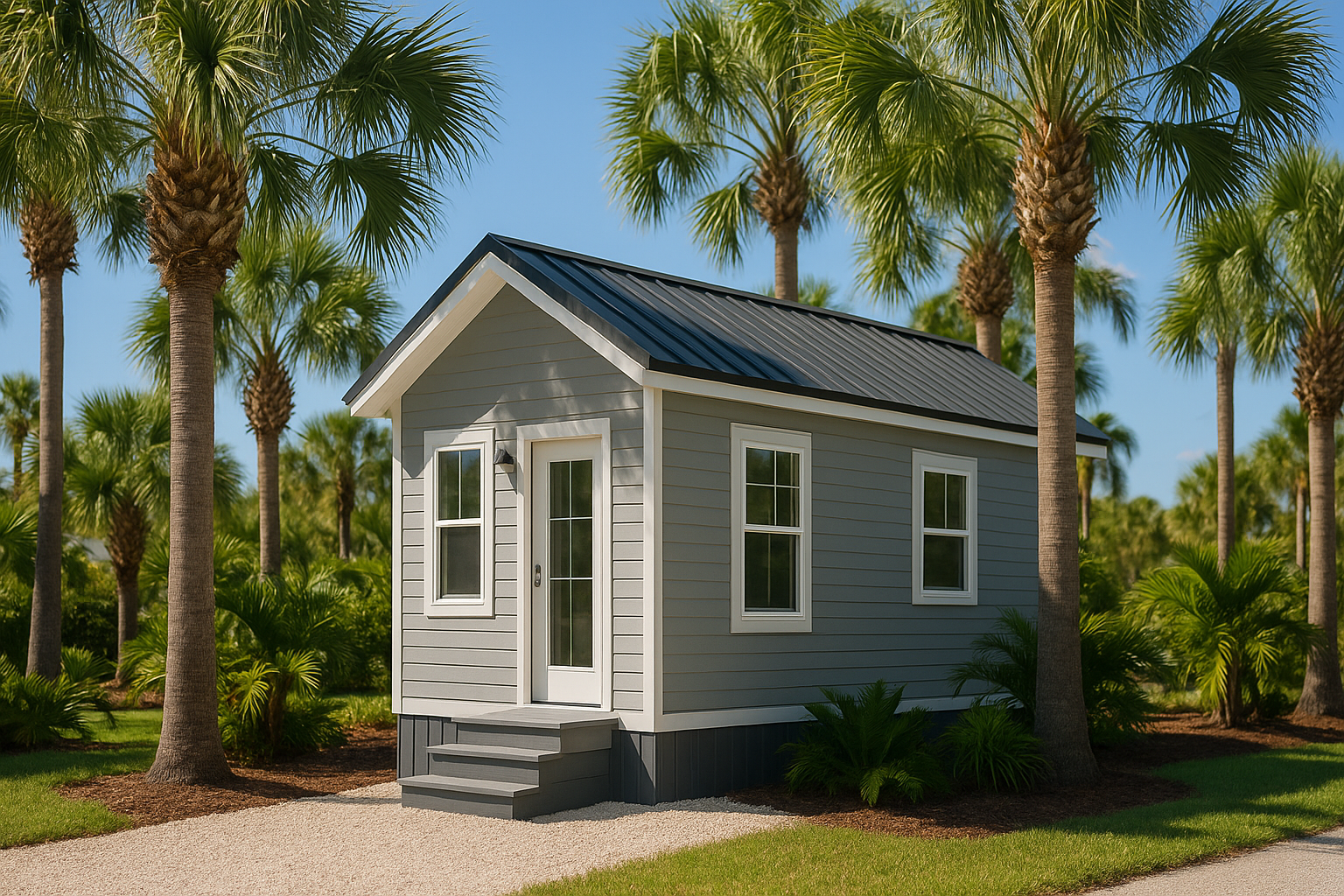
Tiny Home Communities in Florida: What's Actually Legal County by County
Florida, like most states, has no single statewide tiny home law. Placement is governed mostly by county and city zoning across the state's 67 counties, and a 2026 push for statewide reform mostly fell short.
2026 Legislative Attempts
As of July 2026, neither a movable tiny home law nor a statewide accessory dwelling unit (ADU) mandate is in effect. SB 48, which would have required local ADU ordinances, passed the Senate 38–0 but died in messages on March 13, 2026. HB 1389 did become law as Chapter 2026-179, effective July 1, 2026, but its ADU provisions were stripped by amendment before final passage. In short: the legislature came close to a statewide framework but didn't land one this cycle.
Vehicle vs. Building — the Distinction That Matters Most
A tiny home on wheels is generally treated as an RV in Florida, which typically restricts it to RV parks and campgrounds and often requires moving the unit every 45 days — not a realistic setup for full-time living on private land. A tiny home on a permanent foundation is treated as a standard dwelling and must meet the Florida Building Code, which includes Appendix Q for homes under 400 square feet — but local zoning still controls where it can actually be placed, regardless of code compliance.
County Examples
Citrus and Clay counties are commonly cited as allowing tiny homes that meet the Florida Building Code, though these claims come from commercial sources rather than official county documents — confirm current rules directly with each county's building department before relying on them.
Rural vs. Suburban/Coastal
As in most states without a statewide framework, rural and unincorporated Florida counties tend to offer more flexibility, while suburban and coastal municipalities enforce stricter zoning — a pattern that matters especially in Florida given how much of the state's population is concentrated in coastal cities with higher land values and tighter zoning.
What to Do Before Buying Land
Because the legislative landscape is actively shifting (the near-miss SB 48 and the amended HB 1389 both happened in 2026) and because county-level claims online are mostly unverified marketing content, confirm both the current state of any pending legislation and your target county's specific zoning before committing to land or a build.
Join the Discussion
No comments yet. Be the first to share your thoughts!