
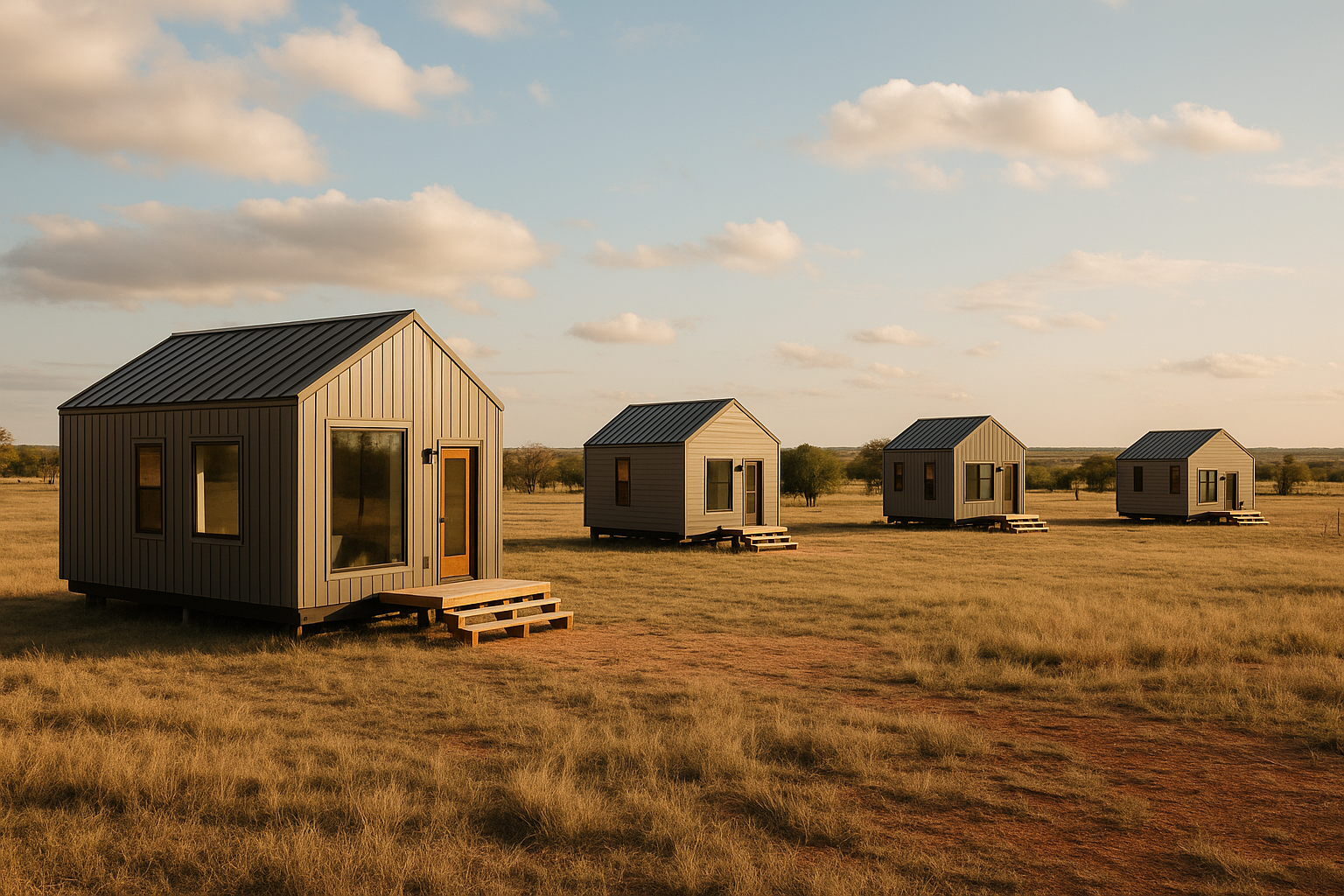
Tiny Home Communities in Texas: County-by-County Rules
Texas has no single statewide law governing tiny homes. With 254 counties, each setting its own rules on minimum square footage, foundations, and placement, where a tiny home is legal depends entirely on the specific county and city you're looking at.
Rural Counties vs. Cities
Most Texas counties, with few exceptions, don't have general zoning authority outside their cities — which tends to make unincorporated rural land more flexible for tiny home placement than inside municipal limits. Cities and suburbs are generally stricter. Houston, for example, still classifies tiny homes on wheels as RVs and restricts their permanent occupation on private property through city ordinance.
County Examples
Ellis County
Permits tiny houses on wheels in RV parks and on private property, and separately allows tiny houses on permanent foundations as single-family homes or accessory dwelling units (ADUs) — giving buyers two distinct legal paths depending on how they want to build.
Angelina and Aransas Counties
Reportedly follow the IRC Appendix Q standard (400 sq ft maximum, 6'8" minimum ceiling height), with permits and inspections required for compliant builds.
A Note on "Statewide Adoption" Claims
Some sources describe a statewide adoption of Appendix Q in Texas — we couldn't independently confirm that claim, and it appears to conflict with the broader "no statewide law" reality described above. Treat it as unverified until confirmed with your specific county.
What This Means for Buyers
Because county-level rules vary this widely — and because most of what's published online comes from tiny-home builders' marketing sites rather than official county documents — the only reliable step before buying land is a direct call to the planning or permitting office for both the county and any city whose limits might cover the parcel. A property that looks rural on a map can still fall inside a city's extraterritorial jurisdiction, which changes which rules actually apply.




Join the Discussion
No comments yet. Be the first to share your thoughts!